


Witch's Wheel of the Year:
Sabbats

Samhain
The Witches’ New Year and the Eternal Cycle of Life, Death and Rebirth
30th April - 1st May
Samhain (pronounced Sow-in) is one of the most sacred and significant festivals on the Wheel of the Year. Celebrated at the end of autumn, approximately halfway between the Autumn Equinox and Winter Solstice, Samhain marks the final harvest, the beginning of the darker half of the year and, in many Pagan and Wiccan traditions, the Witches’ New Year. It is a powerful time of remembrance, reflection, release and transformation, honouring the eternal cycles of life, death and rebirth.
Rooted in ancient Celtic traditions, particularly those of Ireland, Samhain was a seasonal festival marking the transition from the lighter, productive months into the colder, quieter season. The name comes from Old Irish and is commonly associated with the end of summer. For agricultural communities, this was a significant turning point when the final harvest was gathered, livestock were brought in from pasture and preparations were made for the challenges of winter.
Samhain is traditionally regarded as the Witches’ New Year, representing the completion of one spiritual cycle and the beginning of another. Rather than celebrating new beginnings through immediate growth and activity, Samhain encourages us to first acknowledge what has ended. It is a time to reflect on the experiences of the past year, honour the lessons we have learned and release what no longer belongs in the next chapter of our lives.
One of Samhain's most recognised spiritual associations is the belief that the veil between the physical and spiritual worlds is at its thinnest. Within many Pagan traditions, this is considered a time when communication with ancestors, departed loved ones and the spirit realm may feel especially meaningful. Samhain offers an opportunity to remember those who have passed, honour our ancestral connections and reflect upon the wisdom, traditions and experiences handed down through generations.
Ancestral remembrance has long been an important part of Samhain celebrations. Traditionally, families might leave offerings of food, set places at the table for departed loved ones or gather to share stories and memories. Today, these practices may include lighting remembrance candles, displaying photographs, creating ancestral altars, visiting resting places or simply taking a quiet moment to acknowledge those who came before us.
Samhain also honours the natural cycles of life, death and rebirth. In modern Pagan interpretations of the Wheel of the Year, the Goddess enters her wise Crone aspect, representing experience, intuition, transformation and the mysteries of the unseen. The Sun God is symbolically associated with death or descent into the Underworld, reflecting the diminishing strength of the Sun as winter approaches. These seasonal stories remind us that endings are an essential part of life and that periods of darkness and stillness carry the potential for renewal.
The symbolism of death at Samhain extends far beyond physical passing. It also represents the endings we experience throughout our lives - relationships, careers, beliefs, habits, identities and circumstances that have reached their natural conclusion. Just as the Earth releases what is no longer needed, we are encouraged to acknowledge our own transformations and allow outdated patterns to fall away.
Samhain is a particularly meaningful time for divination, spiritual reflection and intuitive practices. Tarot, oracle cards, meditation, scrying, journalling and other forms of spiritual exploration are often incorporated into celebrations. These practices may be used to reflect on the past, seek personal insight and consider the direction of the year ahead.
Traditionally, Samhain celebrations included communal gatherings, feasting and the lighting of protective bonfires. In some historical Celtic customs, fire played an important role in marking the seasonal transition and seeking protection through the winter months. Modern celebrations may include candle rituals, home and energy cleansing, protective workings, ancestral offerings and the creation of sacred spaces for remembrance and reflection.
Spiritually, Samhain is associated with protection, release, ancestral connection, divination, transformation and new beginnings. It is a time to clear stagnant energy, release emotional burdens, establish intentions for the coming year and strengthen our connection with our own inner wisdom. Although its themes are closely connected with death and darkness, Samhain is not inherently a celebration of fear. Instead, it encourages respect for life's mysteries and an understanding that darkness and light are equally necessary parts of existence.
Above all, Samhain is a sacred celebration of endings, remembrance and the promise of renewal. As the Witches’ New Year, it invites us to honour those who have walked before us, acknowledge everything we have experienced and release what we are ready to leave behind. It reminds us that death and endings are not simply losses, but natural transitions within the greater cycle of life. As the Wheel of the Year turns towards winter, we are encouraged to embrace stillness, trust our inner wisdom and welcome the next chapter with intention, gratitude and reverence.

Yule - Winter Solstice
A Celebration of Light
21st June
Yule, celebrated at the Winter Solstice, marks the longest night and shortest day of the year - the darkest point on the Wheel of the Year. Although the Wheel is an eternal cycle with no true beginning or end, Yule is considered by some traditions to be the Witches’ New Year, symbolising the rebirth of the sun and the beginning of a new cycle of light, life and renewal.
As the sun reaches its lowest point and begins its gradual return, Yule reminds us that even in the deepest darkness, light and hope remain. Within Wiccan traditions, this sacred time honours the rebirth of the Sun God, representing the Divine Masculine, born of the Goddess in her aspect as the Sacred Mother. It reflects the eternal cycle of life, death and rebirth, reminding us that even when the natural world appears still, new life is quietly preparing beneath the surface.
Yule is also associated with the Crone, the wise winter aspect of the Goddess, who represents wisdom, introspection and the lessons gathered through life's experiences. Her presence encourages us to embrace the quieter season, reflect on the past and recognise the importance of rest before renewal.
A time of reflection, self-care and transformation, Yule invites us to slow down and consider what truly nourishes our body, mind and spirit. Self-care during this season extends beyond physical comfort, encouraging healthy boundaries, emotional healing, personal growth and the release of what no longer serves us. It is a powerful time for cleansing rituals, letting go of old patterns and setting intentions for the cycle ahead.
Traditionally, Yule is a festival of fire, light and togetherness. Candles, bonfires, evergreen decorations, Yule logs and solar symbols honour the returning sun, while sharing food, exchanging gifts and gathering with loved ones celebrate warmth, generosity and connection. Cleansing through smoke, sound or intention, lighting candles and performing rituals of renewal are meaningful ways to welcome the returning light.
Above all, Yule is a celebration of hope, rebirth and new beginnings – a reminder that darkness is a natural part of life's cycle, that rest has its own purpose, and that even the longest night eventually gives way to the light.

Imbolc
A Celebration of Transition
1st August
Imbolc, often recognised as the second Sabbat of the Witches’ Year, is celebrated halfway between Yule and Ostara, marking the midpoint of winter and the first stirrings of spring. This sacred turning point on the Wheel of the Year is a festival of fire, light, hope and renewal, as the days gradually lengthen and the natural world begins to awaken from its winter rest.
Rooted in ancient Celtic traditions, Imbolc is associated with the Gaelic word Oimelc, commonly interpreted as "ewe's milk," reflecting the traditional lambing season and the return of nourishment and fertility to the land. It is a time of patience, transition and new beginnings, when the first signs of life begin to emerge, reminding us that even the darkest seasons eventually give way to growth.
Imbolc is deeply connected to the Celtic goddess Brigid, honoured in many modern Pagan traditions in her Maiden aspect. Goddess of fire, healing, fertility, poetry, inspiration and the hearth, Brigid represents the returning light and the creative spark awakening within the Earth and ourselves. Her sacred flame symbolises purification, transformation and the promise of new life.
Often associated with Candlemas and the blessing of candles, Imbolc is traditionally celebrated through fire and light. Candles, particularly beeswax candles, are associated with Brigid and may be lit to honour her presence, welcome the strengthening sun and illuminate the path ahead.
This is also a time of pregnancy, potential and preparation, when the Earth is symbolically carrying the seeds of the coming season. Just as nature quietly prepares for new growth, our own dreams, intentions and creative ideas may begin to take shape. Imbolc encourages us to nurture these possibilities with patience, allowing them to develop before bringing them fully into the world.
Cleansing and purification are central to this Sabbat. As the Earth begins its seasonal renewal, we are invited to clear away stagnant energy, release old patterns and create space for fresh beginnings. This may involve physically cleaning our homes, cleansing with smoke or sound, lighting candles or performing simple rituals of reflection and intention.
Above all, Imbolc honours the transition between darkness and light, stillness and movement, dreaming and becoming. It encourages us to reconnect with nature, embrace our creative potential and recognise the quiet changes taking place within and around us. A celebration of hope, patience and renewal, Imbolc reminds us that even when growth cannot yet be seen, life is already stirring beneath the surface.

Ostara - Spring Equinox
A Celebration of Rebirth and Renewal
20th - 23rd September
Ostara is the celebration of the Spring Equinox, a sacred turning point in the Wheel of the Year where day and night come into perfect balance. It is during this time that the cycle of life, death and rebirth reaches its completion and the Earth begins to stir with vibrant new life.
The cold grasp of winter begins to ease, making space for warmth, light and growth. Plants begin to bloom, animals emerge from hibernation and the air hums with the quiet promise of potential. This is a time of awakening - not only for the natural world but for our inner selves as well.
The energy of Ostara calls us to shake off the weight of the colder months and reconnect with the movement and momentum of spring. “Spring cleaning” becomes more than just a household task; it transforms into a ritual of renewal and clearing. Just as we open windows to let fresh air flow through our homes, we are invited to cleanse and refresh our inner spaces. A cleansing bath, perhaps infused with Palo Santo, herbs or floral elements, can help wash away lingering heaviness or stagnant energy.
It’s a time to reflect, release and make space for the new - both physically and emotionally. Creating an altar with seasonal colours, herbs and crystals can act as a focal point for your intentions, a space where you give thanks for what has been and make room for what is to come.
Ostara is a beautiful moment to align with the energy of fertility, hope and growth. Whether through personal rituals or quiet reflection, we are encouraged to plant the seeds of our dreams, to set goals with clarity and to begin again with courage.
Spells and intentions set during this time are especially powerful when focused on love, abundance, new beginnings and the blossoming of ideas and plans. With balance as our guide and nature as our teacher, we step into the light, ready to grow.

Beltane
The Great Festival of Life, Love & Abundance
31st October -1st November
Beltane, celebrated halfway between the Spring Equinox and Summer Solstice, marks one of the most vibrant and joyous Sabbats on the Wheel of the Year. Standing directly opposite Samhain, which honours death, endings and the darker half of the year, Beltane celebrates life, light, fertility and the abundance of the natural world. As spring reaches its height, the Earth bursts into colour, flowers bloom, and the growing warmth of the sun brings renewed vitality and promise.
Rooted in ancient Celtic traditions, Beltane is a fire festival associated with the beginning of the warmer season. Its name is often linked to the idea of a bright or sacred fire, reflecting the importance of flames in traditional celebrations. Great bonfires were lit to honour the changing season, with livestock driven between fires for blessing and protection. Communities gathered to feast, dance and celebrate the fertility of the land, welcoming the abundance and prosperity of the months ahead.
Beltane is a celebration of sacred union, fertility and creation. Within many modern Pagan and Wiccan traditions, it honours the coming together of the Goddess and God, representing the union of feminine and masculine energies, Earth and Sun, and the creative forces that sustain life. The Goddess is celebrated in her radiant, fertile aspect, while the God is often represented as the Green Man or Cernunnos, embodying the vitality and abundance of nature. Their symbolic union reflects the endless cycle of birth, growth and renewal.
The Divine Feminine holds a particularly meaningful place within Beltane, representing creation, nurturing, sensuality and the life-giving power of nature. It is a time to honour the strength and beauty of feminine energy, celebrate the body and embrace the pleasures of being alive. Fertility during Beltane extends beyond physical conception, encompassing the growth of relationships, creative ideas, personal development and the manifestation of dreams.
Traditionally, Beltane celebrations included dancing around the Maypole, weaving colourful ribbons to symbolise union and the intertwining forces of life. Flowers, greenery and garlands decorated homes and sacred spaces, while fire rituals were performed for protection, purification and good fortune. Today, Beltane may be honoured through lighting candles, creating floral altars, working with herbs and crystals, sharing food, or gathering with loved ones in celebration.
Love, passion, confidence and connection are central to the energy of Beltane. This is a meaningful time to strengthen relationships, heal emotional divides, welcome new love and deepen our connection with ourselves. Rituals and intentions may focus on self-love, attraction, fertility, abundance, creativity and personal empowerment, encouraging us to embrace our desires and move forward with renewed confidence.
As the Earth flourishes, Beltane invites us to recognise the abundance already present in our lives while nurturing the possibilities still waiting to unfold. It encourages us to step beyond hesitation, express ourselves freely and celebrate the joy of living, loving and creating.
Above all, Beltane honours the sacred fire of life – the passion that inspires us, the love that connects us and the creative energy that allows us to grow. It is a celebration of vitality, beauty, pleasure and abundance, reminding us to embrace the fullness of life and blossom alongside the natural world.

Litha - Summer Solstice
A Celebration of Light, Strength & Abundance
20th - 23rd December
Litha, celebrated at the Summer Solstice, marks the longest day and shortest night of the year, when the sun reaches its greatest strength and the Earth is bathed in warmth, light and vitality. One of the most radiant Sabbats on the Wheel of the Year, Litha celebrates the height of the sun's power, the abundance of nature and the joy of life in full bloom.
As the sacred midpoint between Beltane and Lughnasadh, Litha represents the peak of summer's energy. The natural world flourishes with colour, growth and activity, while the promise of future harvests begins to take shape. Although the solstice marks the turning point when daylight will gradually begin to decrease, it is first and foremost a celebration of light in all its glory.
Litha is deeply connected to the Divine Masculine and the power of the Sun God, who stands at the height of his strength, representing vitality, courage, protection, action and abundance. His warmth nourishes the fertile Earth, reflecting the sacred relationship between masculine and feminine energies and the creative forces that sustain life. Within some Pagan traditions, Litha is also associated with solar deities such as Baldur, the Norse god connected with light, beauty and purity.
This is a season of confidence, passion, creativity and personal empowerment. Just as the sun shines at its brightest, Litha encourages us to recognise our own strengths, embrace our ambitions and express ourselves without hesitation. It is a time to celebrate achievements, pursue opportunities and reconnect with the passions that bring meaning and joy to our lives.
Traditionally, the Summer Solstice was celebrated with bonfires, feasting, dancing and gatherings beneath the open sky. Fires were lit to honour the sun, while protective charms, herbs and seasonal greenery were used in rituals for prosperity, purification and good fortune. In folklore, midsummer is also closely associated with the fairy realm, with dawn and dusk considered particularly magical times when the veil between the human and fairy worlds was believed to grow thin.
Today, Litha may be honoured through lighting candles, creating solar altars, gathering seasonal flowers and herbs, spending time outdoors or sharing food with loved ones. Sun symbols, bright colours, crystals and fire rituals can be incorporated into celebrations to represent strength, vitality and the abundance of the season.
The energy of Litha is particularly associated with powerful intentions and transformative ritual work. Spells and rituals may focus on success, protection, confidence, prosperity, creativity, healing and personal growth. It is a meaningful time to release self-doubt, strengthen determination and take inspired action towards the goals and dreams we wish to bring into reality.
While Litha celebrates the sun at its peak, it also reminds us of the importance of balance and the ever-changing cycles of nature. From this point forward, the days will slowly begin to shorten, encouraging us to appreciate the present moment and recognise that every stage of life has its own purpose.
Above all, Litha is a celebration of light, joy, abundance and the fire within us. It invites us to embrace the fullness of life, honour our achievements and shine with confidence, gratitude and purpose. As the sun reaches its greatest brilliance, we are reminded of our own capacity to grow, create and illuminate the world around us.
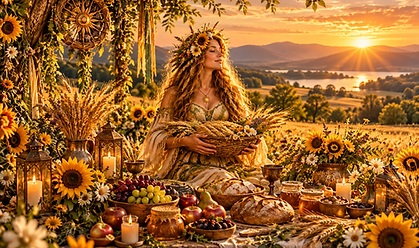
Lughnasadh (Lammas)
A Celebration of Abundance, Gratitude & Sacred Release
1st February
Lughnasadh, also known as Lammas, marks the first of the three traditional harvest festivals on the Wheel of the Year, celebrated approximately halfway between the Summer Solstice and Autumn Equinox. Although the days may still be long and warm, this sacred turning point signals the gradual transition from the height of summer towards the approaching autumn. It is a celebration of abundance, gratitude, growth and the rewards of patience, dedication and hard work.
Rooted in ancient Celtic traditions, Lughnasadh takes its name from Lugh, the Irish god associated with skill, craftsmanship, strength and the arts. According to Irish mythology, Lugh established funeral games and gatherings in honour of his foster mother, Tailtiu, who was said to have died from exhaustion after clearing the land for cultivation. Her sacrifice represents the nurturing and life-sustaining gifts of the Earth, reminding us that every harvest is the result of care, effort and the natural cycles of life.
The name Lammas comes from the Old English hlafmæsse, meaning "loaf mass", reflecting the tradition of baking bread from the first grain harvest and offering thanks for the nourishment received. Both celebrations honour the importance of the harvest, community and the relationship between humanity and the land.
Lughnasadh is deeply connected to the Divine Feminine and the abundance of Mother Earth. As the land begins to offer her gifts, we are reminded of the nurturing energy that sustains all life. Ripened grains, fruits and seeds symbolise the results of growth and devotion, while the act of harvesting reflects the importance of recognising what has flourished through our own efforts.
This Sabbat celebrates abundance, achievement and gratitude, but also carries the wisdom of sacrifice, release and transformation. Just as crops must be cut to provide nourishment and seeds gathered for future planting, we are encouraged to recognise what has reached completion in our own lives. It is a time to celebrate successes, release what no longer serves us and make space for the next stage of growth.
Traditionally, Lughnasadh was celebrated through communal feasts, games, competitions, storytelling and gatherings that honoured the first harvest. Freshly baked bread, grains, seasonal fruits and other foods were shared in gratitude for the Earth's generosity. Today, celebrations may include baking bread, preparing a harvest meal, creating altars with grains, herbs, crystals and seasonal produce, or spending time outdoors connecting with the natural world.
Gratitude is at the heart of Lughnasadh. Beyond material abundance, this festival encourages us to acknowledge the blessings that enrich our everyday lives – health, family, friendship, love, shelter, stability and the opportunities we have been given. It reminds us that abundance takes many forms and that even the smallest blessings deserve recognition.
Spiritually, Lughnasadh is a meaningful time for rituals focused on prosperity, success, gratitude, personal growth and releasing old patterns. It encourages us to receive without guilt, share our blessings generously and recognise the balance between effort and reward. By honouring what we have achieved while remaining open to future possibilities, we align ourselves with the natural rhythm of growth, harvest and renewal.
Above all, Lughnasadh is a celebration of the fruits of our labour, the generosity of the Earth and the importance of giving thanks. It reminds us that every achievement begins with a seed of intention, that growth requires patience and dedication, and that every harvest carries the promise of another beginning. As the Wheel of the Year continues to turn, we are invited to receive with open hands, release with grace and move forward with gratitude for all that sustains us.

Mabon - Autumn Equinox
A celebration of balance, gratitude and harvest blessings
20th - 23rd March
Mabon, celebrated at the Autumn Equinox, marks the second of the three traditional harvest festivals on the Wheel of the Year. As day and night reach a moment of near-perfect balance, this sacred turning point represents harmony, gratitude, reflection and the gradual transition from the warmth and abundance of summer into the quieter, darker half of the year.
Named in modern Pagan traditions after Mabon ap Modron, a figure from Welsh mythology whose name means "Son of the Mother", Mabon is associated with youth, vitality and renewal. His mother, Modron, represents the Divine Mother and their mythology reflects themes of separation, transformation and reunion. Although the name Mabon is a relatively modern addition to the Wheel of the Year, the celebration of the autumn harvest and the changing seasons has much older roots.
Mabon is a celebration of both material and spiritual abundance. While Lughnasadh honours the first harvest and the rewards of our physical efforts, Mabon encourages us to look more deeply at the blessings that enrich our lives. It is a time to give thanks not only for food, shelter and prosperity, but also for love, friendship, wisdom, personal growth and the experiences that have shaped us throughout the year.
As the Earth begins to slow and the days gradually shorten, the Goddess is honoured in her transition towards the wise Crone, while the Green Man or Sun God symbolically begins his descent into the Earth. Within some Pagan traditions, this seasonal transition is also associated with the story of Persephone, whose journey into the Underworld reflects the changing seasons and the natural cycles of life, death and rebirth.
Balance is one of the most significant themes of Mabon. With light and darkness standing in harmony, we are encouraged to reflect on the balance within our own lives. This may involve reassessing priorities, recognising where our energy is being depleted, establishing healthier boundaries or making more time for the people and activities that genuinely nourish us.
Mabon reminds us that growth is not always about doing more, but sometimes about knowing when to slow down.
Traditionally, the autumn harvest was a time of gathering and preparation. Fruits and vegetables were preserved, herbs were dried, and provisions were stored for the colder months ahead. Communities shared food, celebrated the Earth's generosity and prepared their homes for the approaching winter. Today, Mabon may be honoured through harvest feasts, creating seasonal altars with fruits, grains, leaves, herbs and crystals or sharing our abundance with others.
Self-care, reflection and intentional living are also central to the energy of Mabon. As nature begins its gradual retreat into rest, we are invited to do the same. Taking time for a cleansing bath, enjoying herbal teas, journaling, meditation or simply sitting quietly can become meaningful acts of personal renewal. This is a time to nurture ourselves, acknowledge our achievements and release the expectations or burdens we no longer need to carry.
Spiritually, Mabon is a meaningful time for rituals focused on gratitude, balance, protection, emotional healing and releasing old patterns. It encourages us to recognise what has reached completion, celebrate the wisdom gained through our experiences and prepare ourselves for the next stage of the Wheel. Just as the Earth releases what is no longer needed, we too can create space for rest, transformation and new beginnings.
Above all, Mabon is a celebration of gratitude, balance and the wisdom of letting go. It reminds us that abundance is not measured solely by what we possess, but by the richness of our experiences, relationships and inner wellbeing. As the light gradually gives way to darkness, we are invited to honour all that has been, embrace the beauty of change and move forward with gratitude, peace and trust in the continuing cycles of life.

A Personal Note
The information shared throughout this Wheel of the Year – Sabbats section is a collection of my own research, experiences, spiritual practices, interpretations and personal beliefs, along with knowledge and inspiration gathered from various books and texts I have enjoyed reading over the years.
Spirituality, witchcraft and ritual work are deeply personal and different traditions, cultures and individuals may have their own interpretations, customs and ways of practising. What resonates with one person may not resonate with another and that's perfectly fine.
This information is simply here to offer guidance, inspiration and ideas for anyone interested in exploring the Wheel of the Year, celebrating the Sabbats or incorporating seasonal rituals into their own spiritual practice. It is not intended to be the only or definitive way of understanding or celebrating these traditions.
Take what resonates, adapt what feels right for you and leave behind what doesn't. Your spiritual path is your own and I encourage you to explore it in whatever way feels authentic to you. 💜